Salt, Oak, and Iron Belerion, Longford & Armorica · c. 480 – 56 BCE 15+

Salt, Oak, and Iron

A Three-Volume Historical Trilogy of the Atlantic Tin Coast, the Corlea Bog Road, and the Veneti of Morbihan

Belerion, Longford & Armorica · c. 480 – 56 BCE · 15+

Locked Continuous Spine Mural (Idea C: The Sounding-Line and Sub-Surface Cutaway) · 1,042 Pages Across Books I to III (302 + 360 + 380 pp · 59.6 mm)

Archaeometric & Primary-Source Spine Across Four Centuries

Three self-contained historical volumes connected strictly by physical objects, coastal pilotage covenants, seasoned oak carpentry, and epigraphic silences rather than dynastic bloodlines.

Book I · Belerion & Gadir (c. 480 BCE)

Anchored to Pliny (NH 2.169a), Avienus (Ora Maritima 90–129, 380–415), Diodorus (5.22), Salcombe and St Mawes tin ingots, and Ramon T-11.2.1.3 Gaditan amphora metrology.

Book II · Corlea Bog Road (148–147 BCE)

Anchored to Queen's University Belfast dendrochronology on Barry Raftery's Corlea Trackway 1 in Co. Longford: roughly three hundred split mature oaks pegged over silver-birch rails across quaking Sphagnum.

Book III · Veneti of Morbihan (56 BCE)

Anchored to Caesar (BG 3.7–16) and Strabo (4.4.1): flat-bottomed flush-laid oak hulls fastened with thumb-thick iron bolts, alum-tanned cattle-hide sails, and forged iron anchor-chains.

Interactive Epigraphy Studio & Visual Archive

Ancient Scripts, Grammar & Epigraphy Studio (128 Concepts)

Six parallel pure-vector script and register lanes spanning Atlantic Split-Hazel Tally and Comparative Celtic, 5th-Century BCE Gaditan Punic, Cisalpine Celtic (Lugano Alphabet), Continental Gaulish (Gallo-Greek), Armorican and Continental Gaulish (Gallo-Latin), and Primitive Irish Ogam Post-Series Reference (128 concepts, 17 attested and narrative formulae, 12 period-mind guardrails, 171 vector glyphs).

Locked Idea C Spine Mural, KDP Wraps & Medium C Suite

Locked Idea C continuous three-volume spine cutaway, full-bleed KDP cover wraps, Belerion estuary map (map-01), seven Medium C dual-channel plates, and 23-chapter 600-DPI relief openers.

Volumes

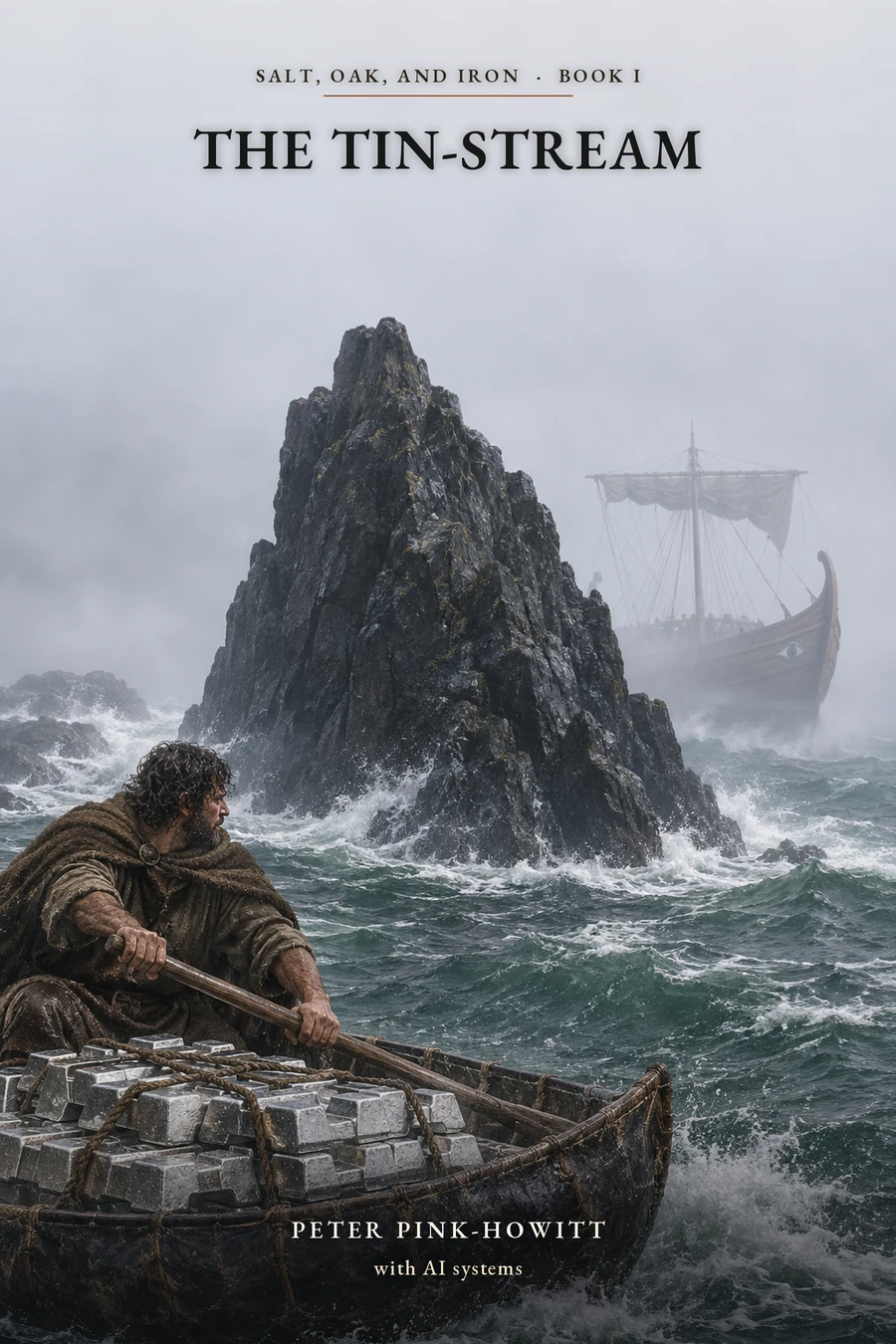
Cover for Book I: The Tin-Stream

Book I: The Tin-Stream 15+

Around 480 BCE, Dumnonian stream-smelter Catona casting four-lugged tin ingots and Oestrymnic pilot Vindos in his seven-hide stitched ox-skin curragh confront Trierarch Shafat's fifty-oared Gaditan ship and young Tartessian clerk Arganthon across a concealed granite bar in Belerion. Across twenty-two chapters and a northern Coda (101,028 prose words plus a 2,697-word Historical Note), split hazel tallies, tallowed sounding-leads, and a two-column Punic wax diptych test what an ocean road costs to write down and what it costs to smooth blank. Accompanied by an archival Belerion estuary map, seven Medium C dual-channel plates (including three panoramic spreads), and a 128-concept Ancient Scripts and Epigraphy Studio.
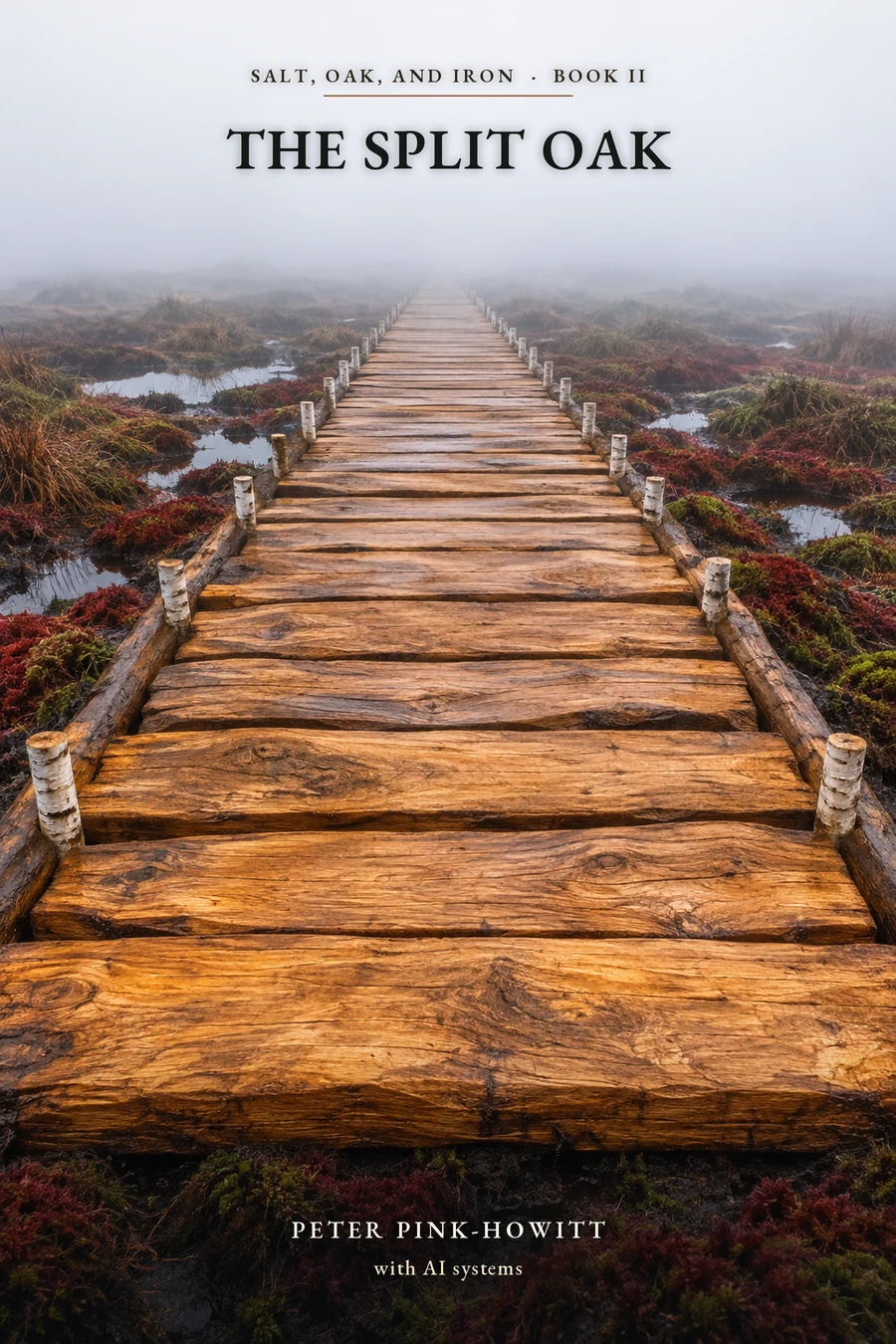
Cover for Book II: The Split Oak

Book II: The Split Oak 15+

Across the winter and spring of 148–147 BCE in central Ireland, communities fell three hundred mature oaks and peg a split-timber roadway across the quaking Sphagnum bog of Corlea for a boundary crossing the living moss will swallow within ten winters.

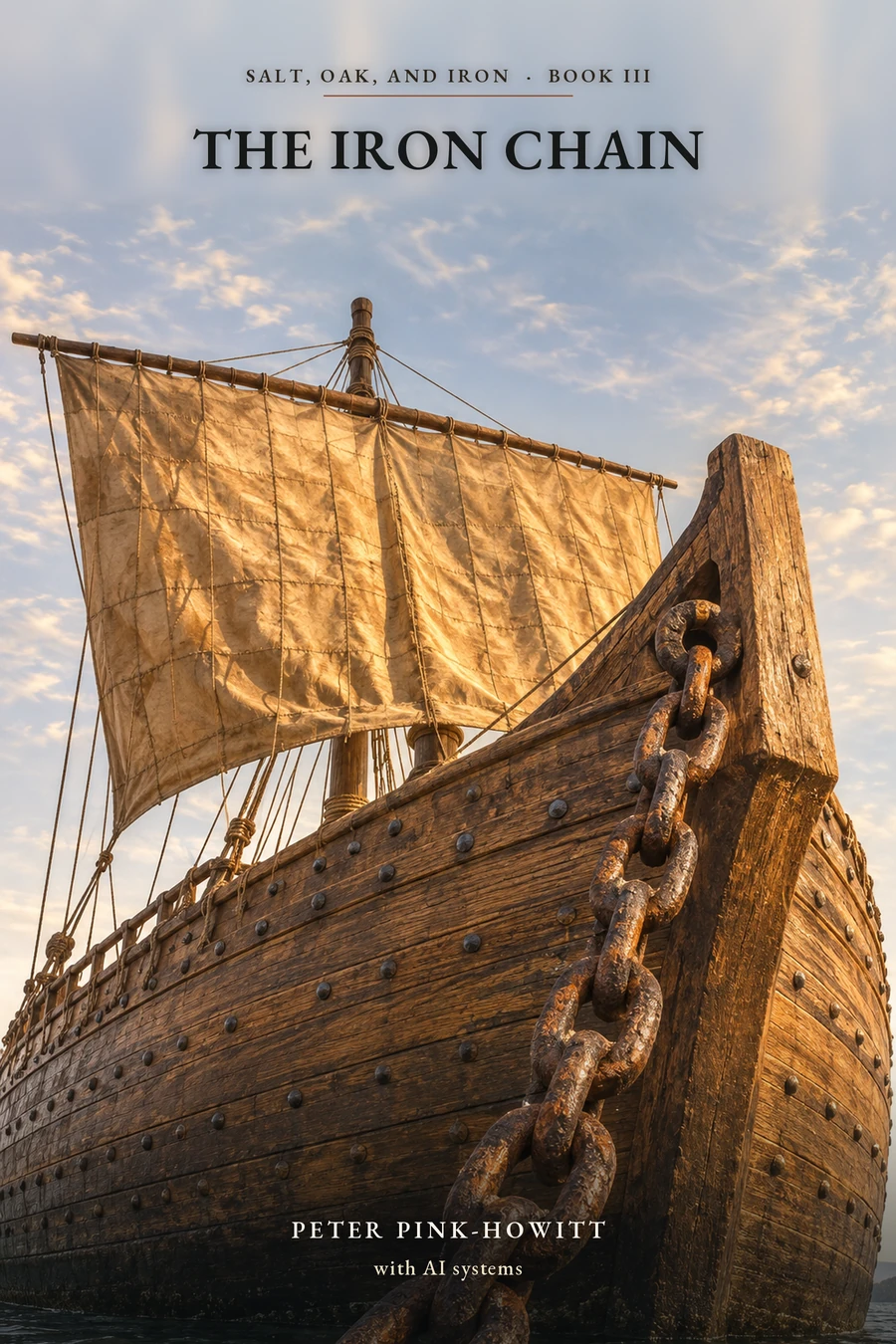
Cover for Book III: The Iron Chain

Book III: The Iron Chain 15+

In 56 BCE off the granite headlands of Morbihan, the maritime Veneti—sailing flat-bottomed flush-laid oak hulls rigged with raw cattle-hide sails and iron anchor-chains—detain Roman grain prefects and meet Caesar's sickle-hooks in a sudden dead calm.

Chronology & Story Scrubber

c. 480 BCE · Belerion & Gadir — Pliny (NH 2.169a) and Avienus (Ora Maritima 90–129, 380–415) preserve Himilco's Punic voyage to the tin-rich Oestrymnides where traders cross rough seas in stitched skin boats; SW British cassiterite streams yield astragalus tin ingots (Diodorus 5.22). · Across fifty-nine days from the Oestrymnic headland to the Belerion tin-ford and back to Melqart's sanctuary at Gadir, Catona's split hazel tallies, Vindos's unwritten channel offset, and Shafat's two-column Punic diptych collide over twenty-one ingots of stream-tin.
148–147 BCE · Corlea Bog Road — Queen's University Belfast dendrochronology dates Barry Raftery's Corlea Trackway 1 (Co. Longford) to oaks felled in late 148 or early 147 BCE (roughly three hundred oaks on silver-birch rails, over five thousand pegs, zero wheel-ruts, submerged by Sphagnum within a decade). · Three centuries after a first-fruits tin ingot and a notched hazel half-rod cross north into Ierne, a single-season collective felling bridges the boundary bog under contested Iron Age kingship.
56 BCE · Morbihan & Quiberon — Caesar (BG 3.7–16) records Venetic detention of Roman grain-prefects Velanius and Silius, tidal promontory evacuations, iron-bolted oak hulls with leather sails and iron chains, and Decimus Brutus's victory during a sudden wind drop. · Four centuries of Atlantic house-council pilotage, seasoned oak shipwrightry, and iron ground-tackle meet Roman boarding hooks when the wind dies off the granite shoals.